The Disgusting Guide to the Dockyard

Think Portsmouth Historic Dockyard is all heroic captains, magnificent ships and glorious naval victories? Think again. Life at sea wasn’t always glamorous. Imagine sharing cramped living quarters with hundreds of sailors, eating food that might be crawling with insects, enduring painful medical treatments and trying to use the toilet while travelling hundreds of feet beneath […]

dockyard

26/10/2026

Read Article

A Christmas Ship

Step aboard HMS Warrior and travel back in time to a cold and crisp Christmas eve in 1863. Meet with Father Christmas and receive a festive gift and join the crew as they prepare for a festive celebration in true Victorian style.

Rhiannon Garforth

15/09/2026

Read Article

Set Sail for Storytime – 26 Sept 2026

Join Captain Compass on an uplifting adventure inspired by Look Up! Captain Compass is certain he has spotted something extraordinary high above the Dockyard. The only trouble is, now that everyone is looking, he can’t seem to find it again! Armed with telescopes, imagination and plenty of help from his crew, young explorers will join […]

Rhiannon Garforth

14/09/2026

Read Article

Relaxing Day Out in Portsmouth: The Sea Air Route

Only got a day? Take the Sea Air Route. Looking for a relaxing day out in Portsmouth? Discover HMS Warrior and the historic harbour with this one-day itinerary. Not every great day out needs to be packed from morning until evening. Sometimes the best discoveries happen when you slow down.

dockyard

11/08/2026

Read Article

Set Sail for Storytime – 24 April

Inspired by Counting on Katherine, this engaging storytelling adventure introduces children to the remarkable story of Katherine Johnson, whose extraordinary mathematical talent helped make space exploration possible.

Sharna Bennett

09/07/2026

Read Article

Set Sail for Storytime – 26 June

Inspired by The Storm Whale, this beautiful storytelling adventure explores friendship, empathy and our relationship with the natural world.

Sharna Bennett

09/07/2026

Read Article

Set Sail for Storytime – 20 Feb

Inspired by Mae Among the Stars, this uplifting storytelling adventure introduces children to the remarkable story of Mae Jemison, the first African American woman to travel into space, whose determination and love of learning turned an ambitious dream into reality.

Sharna Bennett

09/07/2026

Read Article

Set Sail for Storytime – 22 May

Alongside Captain Compass, Eddison and Ratty, children will discover how weather shapes our journeys, influences the natural world and affects life both on land and at sea.

Sharna Bennett

09/07/2026

Read Article

Set Sail for Storytime – 27 March

Inspired by Odd Fish, this interactive storytelling adventure celebrates biodiversity, adaptation and the incredible variety of life beneath the waves.

Sharna Bennett

09/07/2026

Read Article

Set Sail for Storytime – 24 Oct

Help Captain Compass solve the mystery as families discover how small actions can make a big difference to our oceans. Combines theatre, storytelling and STEM.

Sharna Bennett

09/07/2026

Read Article
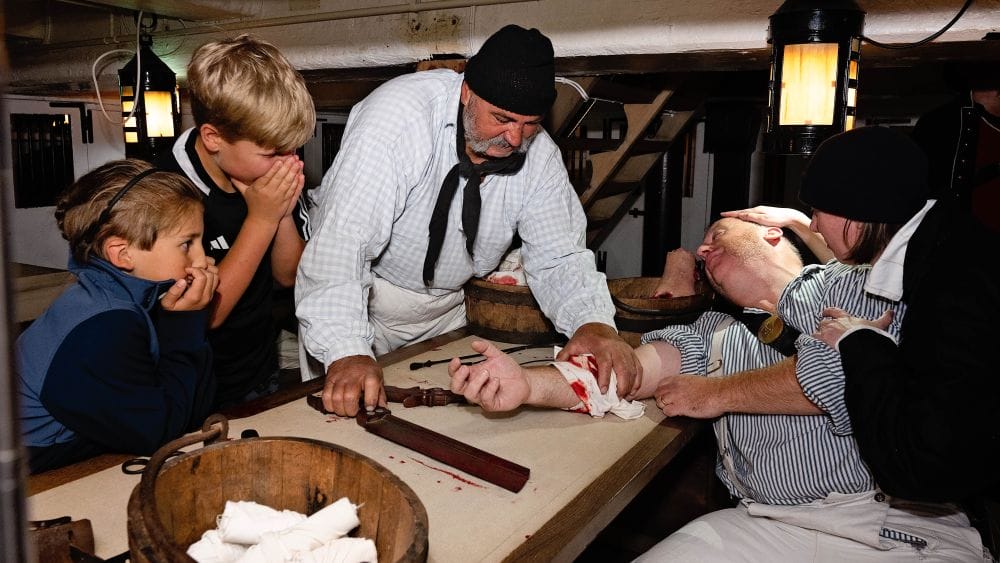
Costumed ship’s surgeon re-enacts an amputation on a patient held down on a table, while two children watch and one covers his mouth

1. Surgery at Sea on HMS Victory

Imagine you’re aboard HMS Victory during the Battle of Trafalgar in 1805. Cannonballs are tearing through the ship, wooden splinters are flying and injured sailors are being carried below decks. Now imagine you’re the surgeon.

With no modern anaesthetic, no antibiotics and dozens of wounded men needing urgent treatment, surgery at sea was a terrifying business. Surgeons had to work quickly, often amputating badly injured limbs to give their patients a chance of survival.

And those flying wooden splinters? They could cause devastating injuries of their own.

Infection remained a serious danger even if a sailor survived the initial operation. Suddenly, a trip to the dentist doesn’t seem quite so bad.

Today, you can explore the lower decks of HMS Victory and discover the realities of life and death aboard Nelson’s flagship. Ask your guide about the ship’s surgeons and the conditions they faced during battle.

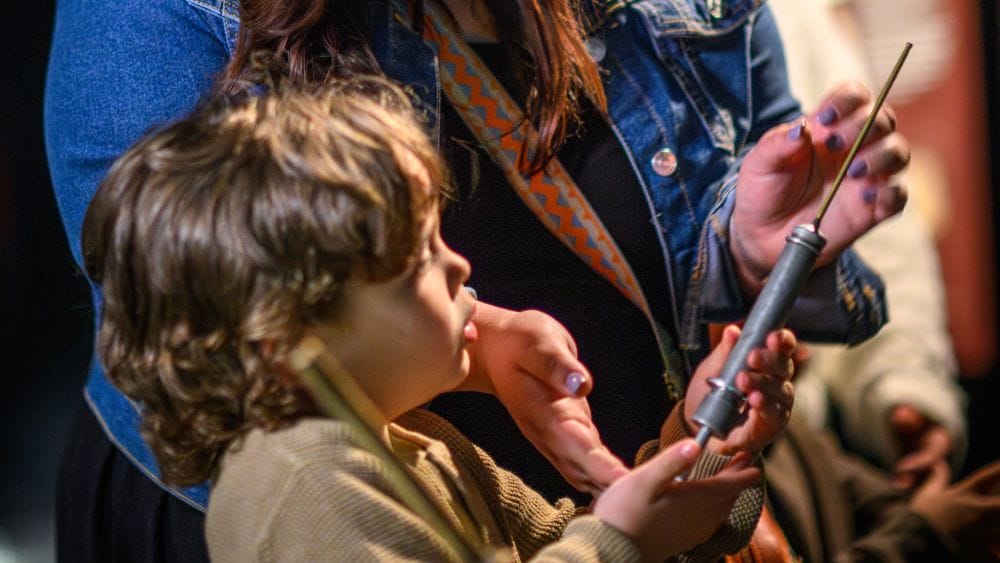
Child looks at a metal syringe held by an adult, part of the Tudor surgeon’s toolkit display at the Mary Rose Museum

2. The Tudor Surgeon’s Toolkit at the Mary Rose Museum

Think a visit to the doctor is frightening? Be grateful you weren’t a sailor in 1545.

When the Mary Rose sank in the Solent, she took an extraordinary collection of Tudor medical equipment to the seabed. Among the discoveries recovered centuries later were the personal possessions and instruments of the ship’s surgeon.

His equipment included knives, syringes, medicine containers and tools used to treat injuries and illnesses. Some of the instruments look alarmingly familiar, while others are enough to make modern patients wince.

But here’s the surprising part: Tudor surgeons weren’t simply guessing their way through treatment. They possessed specialist knowledge and practical skills, particularly when dealing with wounds and injuries.

Unfortunately, they were working without the benefits of modern pain relief, antibiotics or an understanding of infection.

At the Mary Rose Museum, you can discover these remarkable objects and get an extraordinary glimpse into the medical world of Henry VIII’s navy. Just be glad you’re visiting the museum rather than booking an appointment.

Submarine toilet in a cramped compartment surrounded by pipework, on display at Portsmouth Historic Dockyard

3. The Toilet Troubles of HMS Alliance

Here’s a question you probably haven’t considered. How do you flush a toilet when you’re hundreds of feet underwater?

Welcome aboard HMS Alliance, where even going to the loo could become an engineering challenge.

Submarine toilets, known in the Royal Navy as ‘heads’, needed special systems to deal with waste while the submarine was submerged. Unlike your toilet at home, you couldn’t simply press a button and forget about it. And if you think that’s unpleasant, consider the lack of privacy.

HMS Alliance belonged to the first class of British submarines to have toilet cubicle doors. A welcome bit of privacy, surely? Not necessarily. According to Royal Navy Museums, if the submarine dived while someone was inside, changes in pressure could cause the door to seal shut. Some submariners decided it was safer to leave the door open.

Officers even had their own toilet, nicknamed ‘the Throne’, and enjoyed softer toilet paper than the rest of the crew. Rank really did have its privileges.

You can see the toilets for yourself aboard HMS Alliance at Royal Navy Museums: Submarines in Gosport. And while you’re there, squeeze through the narrow passageways, discover where the crew slept and ate, and imagine sharing this cramped world with your shipmates for weeks at a time. Suddenly, sharing a bathroom with your family doesn’t seem quite so bad.

Antique revolvers arranged around a white circular rack on display aboard HMS Warrior

4. The Deadly Weapons of HMS Warrior

HMS Warrior was one of the most formidable warships of her age. When she entered service in 1861, her iron hull, armour plating and powerful guns represented a revolution in naval warfare.

But what would those enormous weapons actually have done to an enemy ship? Step aboard and imagine the thunder of the guns, the smoke filling the air and the devastation caused by heavy projectiles striking wooden warships. The Victorian Navy might have looked impressive in paintings, but the reality of naval combat could be horrifying.

And while HMS Warrior never fired her guns in anger, the threat posed by her powerful weaponry was part of what made her such an effective deterrent.

Want to know more about the less pleasant realities of Victorian naval life? Speak to the knowledgeable team aboard and ask about discipline, punishments and what life was really like for ordinary sailors. You might find that the biggest surprise isn’t how sailors fought, but how they lived. Victorian naval life.

Children and an adult examine ship’s biscuits with a magnifying glass beside a wooden board showing illustrations of weevils

5. Weevils in the Ship’s Biscuits

Feeling hungry? Perhaps save this one until after lunch. For centuries, sailors relied on ship’s biscuits, also known as hard tack, as an essential part of their diet. These weren’t the biscuits you’d dunk in a cup of tea. They were hard, dry and designed to survive long voyages without spoiling.

Unfortunately, they weren’t always the only things aboard the ship that were hungry.

Stored provisions could become infested with insects, including weevils and other pests. Imagine breaking open your dinner only to discover that something inside was already eating it. Delicious.

Sailors sometimes had to deal with insect-infested food because supplies were limited and fresh provisions weren’t always available. It’s a reminder that life at sea involved far more than battles and adventures. Simply getting through mealtimes could be a challenge.

Discover the food, provisions and everyday realities of naval life in the Royal Navy Museum galleries. And perhaps appreciate your next packet of biscuits a little more.

Decorated double-sided wooden comb from the Mary Rose on a clear display stand

6. The 500-Year-Old Nits That Refused to Leave

Feeling itchy? You might be in a minute. When archaeologists excavated the Mary Rose, they recovered 82 nit combs belonging to the Tudor sailors who served aboard Henry VIII’s famous warship.

And here’s the truly disgusting part. Some of those combs still had nits trapped between their teeth, more than 400 years after the ship sank in 1545.

Imagine sharing cramped living quarters with hundreds of other sailors, with little privacy and some very unwelcome passengers living in your hair. Head lice were an unpleasant reality of Tudor life, and those fine-toothed wooden combs were an essential weapon in the battle against them.

In fact, nit combs were the most recovered personal objects from the Mary Rose, offering a surprisingly intimate glimpse into the everyday lives of her crew. You can discover these remarkable objects at the Mary Rose Museum, where even the smallest finds reveal extraordinary stories about life more than 500 years ago. And if you’ve started scratching your head while reading this, you’re definitely not alone.

Just remember, the nits have been there longer than you have.

Think You Could Survive Life at Sea?

From Tudor surgical instruments and insect-infested rations to submarine toilets and the brutal realities of naval warfare, Portsmouth Historic Dockyard reveals a side of history that’s fascinating, surprising and occasionally rather disgusting.

And these six discoveries are just the beginning.

Step aboard legendary warships, explore a real submarine, discover extraordinary objects and meet the people who bring centuries of naval history to life.

With so much to explore, there’s no need to squeeze everything into one visit. Our Ultimate Experience Ticket gives you unlimited return visits to included attractions for 12 months, including HMS Victory, HMS Warrior, the Mary Rose, Royal Navy Museums: Submarines and the new Royal Marines Experience.

Bring the family, follow your curiosity and discover just how entertaining the less glamorous side of history can be.

Book tickets